
Content
In the example below, a simplified price chart of the SPDR S&P 500 ETF Trust (SPY) with Bollinger Bands is shown. For the most part, the stock traded within the tops and bottoms of the bands over a one-month range, though it dipped below the lower band for about a one-week period. The price was between about $495 and $522 Digital asset per share during the month.
How is forex volatility measured?
Beta determines a security’s volatility relative to that of the overall market. South Africa’s economy is heavily influenced by commodity prices -particularly gold- and political instability, which can cause the ZAR to fluctuate sharply against the USD. The pair has been one of the most volatile, with large daily price movements offering high-risk, high-reward trading opportunities. An asset’s historical or implied volatility can have a major impact on how it is incorporated into a portfolio. https://www.xcritical.com/ When constructing portfolios, risk tolerance is a major consideration.
Market Volatility Definition & Description
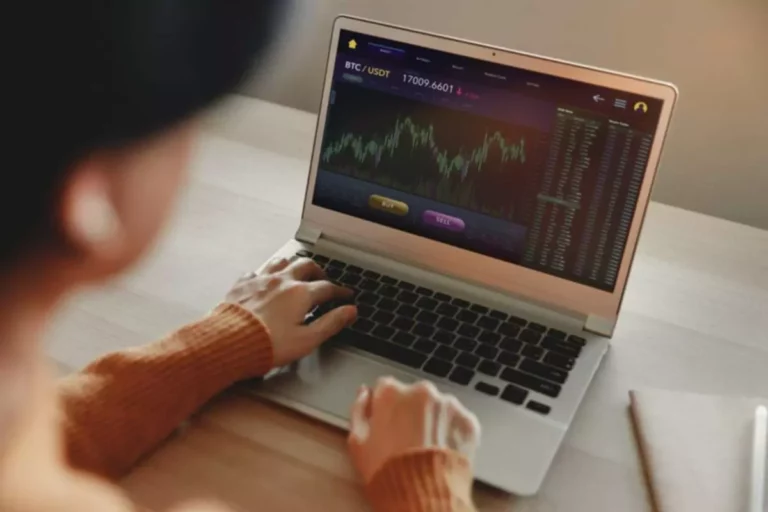
Conversely, if implied volatility decreases after your trade is placed, the crypto volatility trading price of options usually decreases. That’s good if you’re an option seller and bad if you’re an option owner. Some traders mistakenly believe that volatility is based on a directional trend in the stock price. By definition, volatility is simply the amount the stock price fluctuates, without regard for direction. For investors who need short-term liquidity—for example, to purchase a house or a car—volatility can be a liability and source of anxiety. Those who cannot bear the thought of—or cannot afford—locking in losses due to price drops can explore less volatile alternatives that help safeguard funds when they need them.
Volatility breakout trading strategy
Risk can take many different forms, but generally, assets that have greater volatility are perceived as being riskier because they have sharper price fluctuations. HV and IV are both expressed in the form of percentages, and as standard deviations (+/-). You can also use hedging strategies to navigate volatility, such as buying protective puts to limit downside losses without having to sell any shares. But note that put options will also become pricier when volatility is higher.
Have a risk management strategy in place
Stock A moves between $45 and $55 per share in a day, while stock B moves between $48 and $52. In this case, stock A would be considered more volatile due to the larger price swings throughout the day. Our own award-winning online trading platform, Next Generation, offers a number of volatility indicators required to trade the strategies discussed, as demonstrated in the above charts. The platform comes with drawing tools, price projection tools and chart forums so that traders can display their data clearly and easily.
- Thus, we can report daily, weekly, monthly, or annualized volatility.
- Volatility traders frequently take positions on markets that are derivatives of other underlying markets.
- The corporation is one of the leaders in the consumer goods sector.
- In some cases, volatility is simply the result of volatility, as panicked traders race to sell before other traders do, leading to a stock market crash.
For example, when day trading volatile stocks, you can set up a five-minute chart and wait for a short-term trend to develop. For day trading, a 10-period moving average will often highlight the current trend. You should then wait for a consolidation, which is at least three price bars that move mostly sideways, and enter the position if the price breaks out of the consolidation in the trending direction. This is a relatively simple and effective way to trade high volatility stocks.
The outer bands mirror those changes to reflect the corresponding adjustment to the standard deviation. The standard deviation is shown by the width of the Bollinger Bands. The wider the Bollinger Bands, the more volatile a stock’s price is within the given period. A stock with low volatility has very narrow Bollinger Bands that sit close to the SMA. So in principle, we assessed the riskiness of these players by using “Standard Deviation”. In the stock market world, we define ‘Volatility’ as the riskiness of the stock or an index.

The most energetic particles have enough energy to escape from the liquid and enter the gas phase. IG International Limited is licensed to conduct investment business and digital asset business by the Bermuda Monetary Authority. Log in to your account now to access today’s opportunity in a huge range of markets.
Companies with inelastic demand own stocks with low market volatility. Their products will always be popular regardless of the market situation, purchasing power, and other factors. Also, some companies in the technology sector show stable growth with little volatility. Their share price is supported by the positive dynamics of the financial data and releases of new developments. This measures the fluctuations in the security’s prices in the past.
Market volatility is defined by the standard deviation of the returns. The returns are calculated over a given period of time, such as a month or a year. The standard deviation measures how different a stock’s individual returns are compared to its average return over that specific period. The volatility of a stock (or of the broader stock market) can be seen as an indicator of fear or uncertainty. Prices tend to swing more wildly (both up and down) when investors are unable to make good sense of the economic news or corporate data coming out.
This parameter helps to assess how quickly the price changes for the current period relative to the previous ones or how much the security’s price changes relative to other assets. Investors can find periods of high volatility to be distressing, as prices can swing wildly or fall suddenly. Long-term investors are best advised to ignore periods of short-term volatility and stay the course. Meanwhile, emotions like fear and greed—which can become amplified in volatile markets—can undermine your long-term strategy. Volatility is calculated as the standard deviation of the returns for a security or market index.
If there’s an earnings announcement or a major court decision coming up, traders will alter trading patterns on certain options. That drives the price of those options up or down, independent of stock price movement. Keep in mind, it’s not the options’ intrinsic value (if any) that is changing.
There are plenty of good option traders who don’t knowanything about the following historical facts. Unless you’re a real statistics geek, you probably wouldn’t notice the difference. But as a result, the examples in this section aren’t 100% accurate, so it’s necessary to point it out.